Trezor Bridge® — Connect Your Trezor to Web Browsers
If you own a Trezor hardware wallet, chances are you’ve heard of Trezor Bridge®. This essential utility unlocks the power of your Trezor device when interacting with web browsers, enabling you to use the trezor suite web interface and access advanced functions via your favorite browsers. Whether you’re just getting started at trezor.io/start or managing complex transactions through the trezor suite, Trezor Bridge® is a key part of the experience. Trezor Bridge
In this guide, we’ll dive deep into what Trezor Bridge® is, how it works, why it’s necessary, how to install it, and how it ties into the broader Trezor ecosystem – including its integration with Trezor Suite, trezor.io/start, and modern web browsers.
What Is Trezor Bridge®?
Trezor Bridge® acts as a communication layer between your Trezor hardware wallet and web browsers such as Chrome, Firefox, Edge, and Brave. On its own, a browser cannot natively detect USB hardware wallets due to strict security protocols. Trezor Bridge® fills that gap by running on your computer and relaying encrypted requests between the web interface and the Trezor device. Trezor Bridge+1
This communication layer doesn’t manage your crypto funds or display your account balances—the trezor suite does that for you—but it enables the browser to see your Trezor hardware and securely interact with it. When you visit trezor.io/start to begin setup, the page checks if trezor bridge is installed. If not, you’ll be prompted to install it. Trezor Bridge
In essence:
Trezor Bridge® translates browser requests into USB commands your Trezor device understands.
Trezor Suite, which you can install or launch via trezor.io/start, is the user interface that displays your wallet and actions.
Without Trezor Bridge®, browser-based interactions with your hardware wallet would not function reliably. Trezor Bridge
Why Trezor Bridge® Matters
Modern web browsers have increasingly restricted direct access to USB devices due to security concerns. While some browsers support WebUSB (which allows direct USB connections from webpages), this support is inconsistent across browsers and operating systems. As a result, the standalone trezor bridge remains essential for consistent functionality across environments. Trezor Bridge
Here are the reasons trezor bridge is important:
1. Enables Browser Connectivity
Browsers like Firefox, Edge, and Chrome may not natively allow hardware wallets to connect. Trezor Bridge® ensures your hardware wallet is visible and accessible when you use the web version of trezor suite or access setup via trezor.io/start. Trezor Bridge
2. Seamless Integration With Trezor Suite
The trezor suite web interface relies on Trezor Bridge® to detect connected Trezor devices, update firmware, send and receive crypto transactions, and manage assets. Without Bridge, these interactions may fail or be blocked by browser security policies. Trezor Bridge
3. Secure Encrypted Communication
All communication facilitated by Trezor Bridge® is encrypted and local; nothing is transmitted over the internet. Your private keys remain safely stored on the Trezor hardware at all times, and the Bridge never accesses them. Trezor Bridge
4. Broad Browser and OS Support
Trezor Bridge® works across popular operating systems (Windows, macOS, and Linux) and major browsers (Chrome, Firefox, Edge, Brave), making it a universal solution for browser-based access. Trezor Bridge
5. Replaces Deprecated Extensions
In the past, browser extensions were required for hardware wallet connectivity. Trezor Bridge® has replaced these outdated extensions, increasing security and compatibility. Trezor Bridge
How Trezor Bridge® Works (Technical Overview)
When you plug your Trezor hardware wallet into your computer via USB:
Browser Attempts Connection: You open a web browser and navigate to the trezor suite interface or trezor.io/start.
Bridge Detects Device: Trezor Bridge®, already running in the background, recognizes the connected hardware wallet.
Secure Communication: Bridge relays encrypted instructions between the browser and the device using a secure local channel (commonly
http://127.0.0.1:21325). Trezor Help Bridge
The browser never connects to the device directly. Instead, it communicates with Trezor Bridge®, which handles all the USB communication and ensures safety and compatibility. Trezor Bridge
Installing Trezor Bridge®
Installing Trezor Bridge® is simple and must always be done via the official Trezor website at:
👉 https://trezor.io/start — this page provides links to download Trezor Bridge®, trezor suite, and any device firmware updates. Trezor Bridge
Step-by-Step Installation Guide
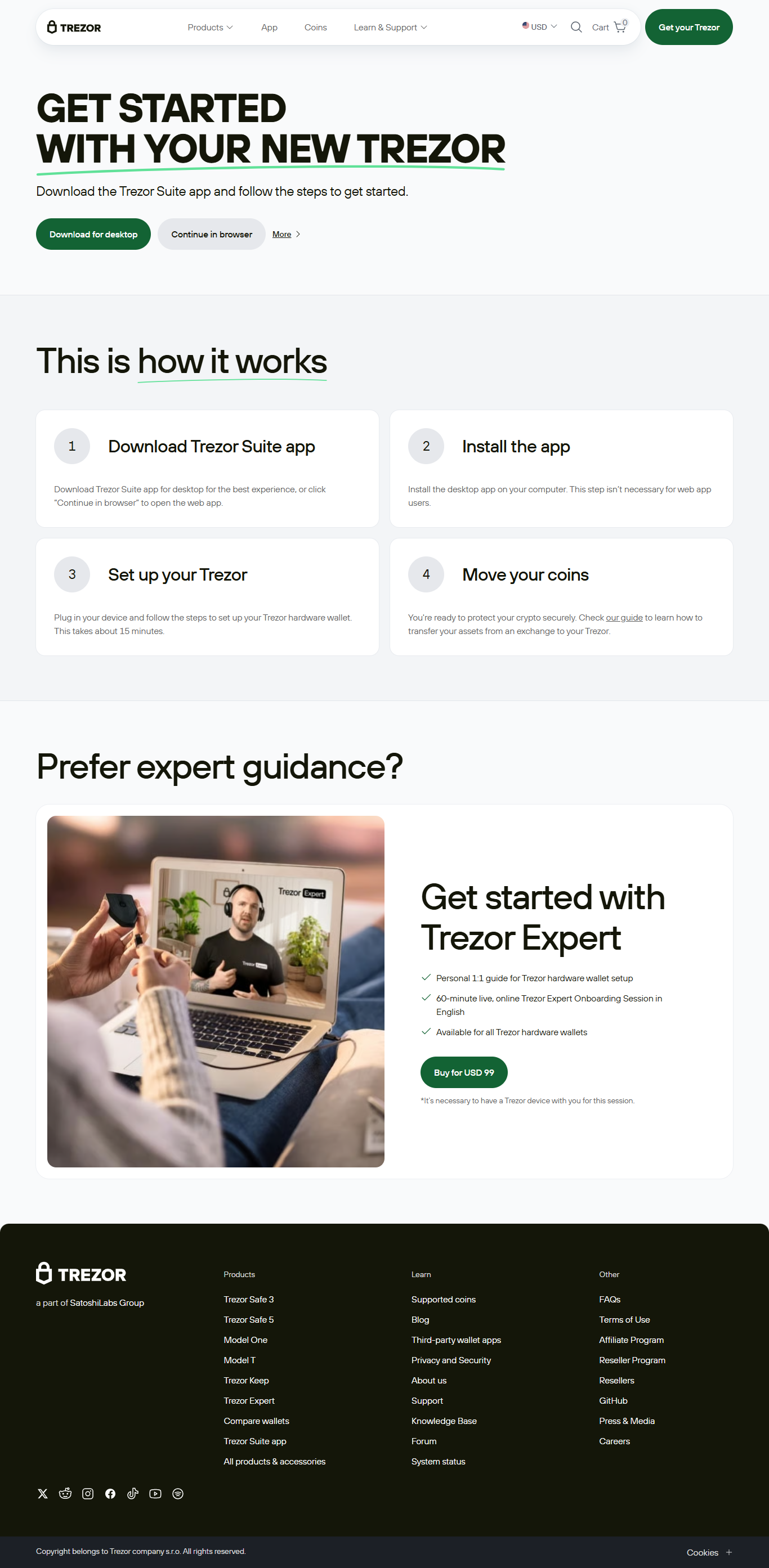
Visit trezor.io/start in your browser. Trezor Bridge
Download Trezor Bridge® for your operating system (Windows, macOS, or Linux). Trezor Bridge
Run the Installer: Follow the installation wizard prompts. Trezor Bridge
Restart Your Browser: Once installed, close and relaunch your browser for proper recognition. Trezor Bridge
Connect Your Trezor: Plug in your device and open trezor suite web or continue setup via trezor.io/start. Trezor Bridge
📌 Note: Always install Trezor Bridge® from trezor.io/start to avoid malicious copies. Trezor Bridge
Troubleshooting Common Issues
Despite its relative simplicity, sometimes Trezor Bridge® can be tricky. Here’s how to resolve the most common problems:
❗ Browser Doesn’t Detect Device
Ensure Bridge is installed and running in the background.
Try switching USB ports or use a different cable.
Restart your browser or computer. Trezor Bridge
❗ Browser Still Doesn’t Recognize Bridge
Clear your browser’s cache and cookies.
Disable conflicting browser extensions.
Reinstall Trezor Bridge® from trezor.io/start. Trezor Bridge
❗ Trezor Suite Doesn’t Launch Correctly
Make sure you’re using a supported browser.
Update to the latest version of trezor suite.
Check that Trezor Bridge® is up to date. Trezor Bridge
If problems persist, consult the official Trezor support section at trezor.io/support for step-by-step help.
Trezor Bridge® vs. Desktop App Connectivity
One common question is: Do I always need Trezor Bridge®?
👉 For the trezor suite desktop application, Trezor Bridge® is usually not required. The desktop app communicates directly with your Trezor device via USB. bridge-trezorio.typedream.app
However, if you’re using the trezor suite in a web browser or performing browser-based setup via trezor.io/start, Trezor Bridge® remains necessary for reliable connectivity. Trezor Bridge
Security Considerations
Trezor Bridge® has been designed with security as a priority:
✔ Encrypted Local Communication: Browser and device messages are encrypted locally. Trezor Bridge
✔ No Private Key Access: Bridge never sees your private keys or recovery phrase. get-trezore-bridge.framer.ai
✔ Open Source: The code is publicly accessible and auditable. Trezor Bridge
✔ Official Downloads Only: Installing from trezor.io/start ensures authenticity and safety. Trezor Bridge
Always avoid unofficial downloads that claim to provide trezor bridge, as those can be malicious and compromise your wallet.
Final Thought
Trezor Bridge® may seem like a small part of the Trezor ecosystem, but it plays a crucial role in connecting your secure hardware wallet to the world of web applications. When paired with the trezor suite and set up via trezor.io/start, Trezor Bridge® becomes the invisible yet indispensable bridge between you, your browser, and your crypto assets.
Whether you’re a beginner setting up your first wallet or an advanced user managing multiple coins, Trezor Bridge® ensures your browser-based interactions remain seamless, encrypted, and safe. Always download and maintain updates directly from the official source at trezor.io/start to protect your assets and enjoy a smooth crypto management experience. Trezor Bridge
FAQs — Trezor Bridge®
1. What is Trezor Bridge® used for?
It allows your Trezor hardware wallet to communicate with web browsers like Chrome and Firefox for browser-based crypto management. Trezor Bridge
2. Where do I download Trezor Bridge®?
Only from the official Trezor start page: trezor.io/start. Trezor Bridge
3. Do I need Trezor Bridge® for the trezor suite desktop app?
No — the desktop app can connect to your device without Bridge. bridge-trezorio.typedream.app
4. Is Trezor Bridge® safe?
Yes — it’s secure, encrypted, and never accesses your private keys. Trezor Bridge
5. Which browsers support Trezor Bridge®?
Chrome, Firefox, Edge, and Brave are supported. Trezor Bridge
6. Does Trezor Bridge® work on all operating systems?
It supports Windows, macOS, and Linux. Trezor Bridge
7. Why does my browser still not detect my Trezor?
Possible reasons include outdated Bridge, conflicts with extensions, or USB cable issues. Trezor Bridge
8. How often should I update Bridge?
Always install the latest version from trezor.io/start for compatibility and security. Trezor Bridge
9. Can I uninstall Trezor Bridge® later?
Yes, but web-browser interactions may stop unless your browser supports native WebUSB. bridge-io-learn.pages.dev
10. Is Bridge required for DApps?
Many Web3 apps rely on it to detect your hardware wallet in a browser.